in daily operation and maintenance or asset management, how to query the number and related information of the thai server is a common requirement. obtaining the server serial number, ip ownership and location in a reasonable and compliant manner will help quickly locate faults, verify contracts and complete audits. this article focuses on executable methods and precautions, and is applicable to hosting, dedicated servers and cloud host environments.
most hosting or cloud service providers directly display the device or instance number, resource id, and order information in the control panel or customer center. log in to the service provider's console and enter the instance details or device list to view the device identification, computer room location and specifications assigned by the manufacturer for quick verification without logging into the system. if the permissions are insufficient, you can apply to the administrator for read-only viewing permissions to complete the verification.
when you have server administrator rights, you can use dmidecode or read the /sys/class/dmi/id directory to query the system serial number and model in linux; in windows, you can execute wmic bios get serialnumber to obtain the bios serial number. note that these commands require root or administrator privileges, and the serial number may be injected by the host or cloud platform in a virtualized environment. interpretation must be based on the actual environment.
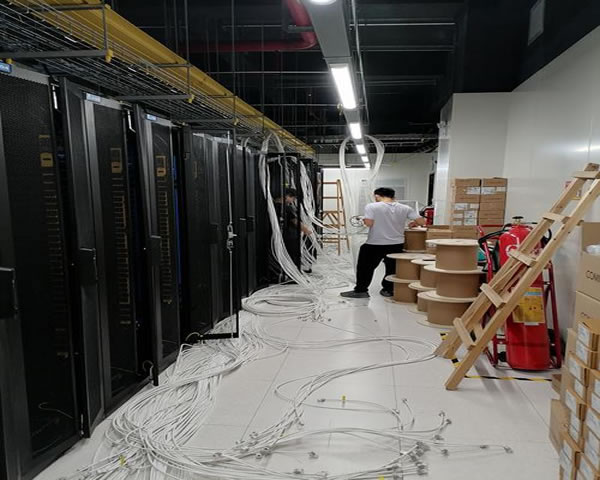
when only the ip address is known, whois can be used to query the registration unit and contact information of the ip. combined with ip geolocation service and traceroute analysis, the country or network ownership of the computer room can be inferred. whois results can help identify providers and find customer service channels, but geographical positioning is not absolutely accurate, and the results should be used as clues rather than the only basis.
for cloud hosts or virtualized instances, many platforms provide metadata services or instance ids. in the instance, the instance id, network information, and regional information can be read through accessing the metadata interface; the console displays the instance id, tenant, and bill number. when querying, give priority to using the metadata and management console provided by the cloud vendor to avoid relying directly on the underlying hardware identification.
when the above methods cannot be fully confirmed, you can obtain the equipment number, computer room number, and asset list in the lease contract through the service provider's work order or telephone support. checking bills, delivery orders, and operation and maintenance records can verify numbering and responsibility. provide necessary credentials when communicating and adhere to privacy and compliance requirements to avoid disclosing sensitive information.
querying server numbers or related information should comply with contract terms and local regulations, and should only be done with legal authority or authorization. avoid unauthorized remote command execution or data capture, record the query process and results for auditing, and take necessary access control and encryption measures for sensitive information to protect the security of customers and corporate assets.
in short, how to query the thai server number and related information should first use the control panel and cloud metadata, combined with system commands and whois analysis, and complete confirmation through supplier and contract verification when necessary. confirm authority and compliance before implementation, and record the process and conclusions for subsequent auditing and operation and maintenance management.
- Latest articles
- How To Assess The Quality Of Third-party VPS Management Services In Hong Kong Through SLAs
- Research On Improving The Accuracy Of Vietnamese Native IP In Mobile Advertising Targeting
- The Low-latency Connection Strategy Helps Malaysian Cloud Servers Provide A Better Experience For Asia-Pacific Users
- High-availability Architecture Design For US High-defense Servers And Card Games From An Operations And Maintenance Perspective
- From Bandwidth To Hard Drive Read/write Metrics, It Is Crucial To Assess The Impact Of Cambodia's Junk Servers On Business
- A Guide To Leasing Server Vendors For Small And Medium-sized Enterprises In Vietnam, Evaluating Cost-effectiveness And Scalability
- Video Site Load Tests Compared To Several Mainstream Malaysian VPS Products
- Thailand Cloud Server Rental Costs, Budget Recommendations For Small Sites And High-traffic Projects
- Comparing Local Data Centers And Singapore Cloud Server Latency And Reliability Differences
- Migration Reference: Vietnam Native IP Cloud Servers: Steps For Migrating From Shared IP To Native IP
- Popular tags
-

Market Prospects And Selection Guide For Modified Tractors And Rvs In Thailand
discuss the market prospects of modified tractor rvs in thailand and how to choose the right rv. -

Tips On How To Play Board Games On Thailand Servers
this article discusses tips for playing board games on thailand servers to help players optimize their gaming experience. -

In-depth Analysis Of Thailand’s Demand For Servers And Market Prospects
in-depth analysis of thailand's demand for servers and market prospects, and exploration of its potential in information technology and data centers.